Healthy Habits Shouldn't Feel Like a Second Job — Here's Why Your Wellness Routine Is Stressing You Out
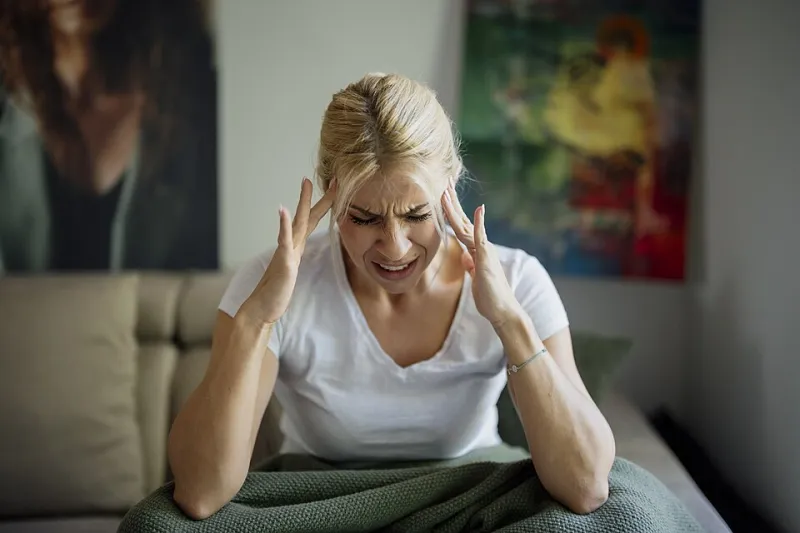
Photo: Shixart1985, CC BY 2.0, via Wikimedia Commons
Somewhere between downloading your fourth health-tracking app and stress-eating almonds because you read they're a superfood, something went sideways. You set out to feel better. Now you're lying awake at 11 p.m. wondering if your cortisol levels are too high — which, ironically, is raising your cortisol levels.
Welcome to the wellness paradox: the strange loop where the harder you chase good health, the worse you end up feeling.
You're not alone in this. Millions of Americans are caught in the same cycle — meal prepping on Sundays, tracking every workout, reading sleep studies at midnight, and somehow ending up more anxious than the person who eats pizza on the couch and goes to bed without a wind-down routine. So what gives?
When Self-Care Becomes Self-Surveillance
There's a version of wellness that genuinely nourishes you — gentle movement, real food, rest, connection. And then there's the other version: a relentless audit of your own body.
Modern wellness culture has quietly shifted from feeling good to performing health. Instead of asking "How do I feel today?" we ask "Did I hit my goals today?" And when the answer is no — when you skipped the gym, ordered takeout, or got six hours of sleep instead of eight — there's a punishment baked right into the system. Guilt. Shame. The creeping sense that you're falling behind on your own life.
Psychologists call this kind of thinking maladaptive perfectionism, and it shows up a lot in wellness spaces. When health becomes a checklist, every unchecked box becomes evidence of personal failure. That's not self-care. That's self-criticism wearing a green juice.
The Science Behind Stress-Driven Health Goals
Here's something worth sitting with: chronic psychological stress is genuinely bad for your physical health. It raises inflammation, disrupts sleep, messes with digestion, and weakens immune function. So when your wellness routine is generating daily anxiety — over whether you're eating "clean" enough or whether your HRV score dipped — you're not neutralizing stress. You're manufacturing it.
Researchers have even identified a phenomenon sometimes called orthorexia nervosa, a disordered relationship with healthy eating where the pursuit of nutritional purity causes significant distress. It doesn't always look dramatic. Sometimes it just looks like a person who can't enjoy dinner at a friend's house because nothing on the table fits their current protocol.
The body doesn't distinguish between "stressed about a work deadline" and "stressed about not meditating this morning." Stress is stress. And when wellness becomes a source of it, the math stops working in your favor.
Why We Fall Into This Trap
It helps to understand why this happens, because it's not a character flaw. It's a pretty predictable response to the environment most of us live in.
For starters, the wellness industry is enormous — worth over $5 trillion globally — and a lot of it is built on the premise that you're not quite there yet. There's always a better supplement, a smarter training split, a more optimized morning routine. That constant drip of "you could be doing more" is designed to keep you buying, but it also keeps you in a state of low-grade inadequacy.
Social media doesn't help. When your feed is full of people documenting their 5 a.m. workouts and color-coded meal preps, it's easy to absorb the message that this is what healthy looks like — and that anything less is falling short.
And then there's the very human tendency to turn something we care about into something we're afraid of losing. Health feels high-stakes because it is high-stakes. So we grip it tighter, monitor it more closely, and somewhere in that tightening, the joy drains out completely.
Reclaiming the Point of All This
So how do you actually fix it? Not by abandoning your health goals — but by changing your relationship with them.
Start with your "why," and make it feel-based, not performance-based. Instead of "I want to lose 15 pounds," try "I want to have energy to play with my kids on weekends without feeling wiped out." One of those is a number you'll never feel satisfied by. The other is a lived experience you can actually feel.
Drop the all-or-nothing framing. A 20-minute walk counts. A salad with dressing counts. Seven hours of sleep counts. Wellness isn't a binary — it lives in the accumulated small choices you make over time, not in whether you nailed every metric on any given Tuesday.
Give yourself permission to be a person, not a project. You are allowed to eat birthday cake at a party without logging it. You are allowed to skip a workout because you're tired and actually need rest. You are allowed to have a body that isn't constantly being optimized.
Audit your inputs. If following certain accounts on Instagram leaves you feeling inadequate, that's data. If a particular podcast makes you anxious about everything you're not doing, you can stop listening. Curating what you consume — including wellness content — is itself a health decision.
Reintroduce pleasure as a legitimate health metric. Joy, rest, laughter, spontaneity — these aren't the opposite of wellness. They're part of it. A life that feels good to live is doing a lot of the work that no supplement stack can replicate.
A Different Kind of Health Goal
What if the goal wasn't to be the most optimized version of yourself, but simply to feel more at home in your own body and life?
That shift sounds small, but it changes everything. It means your worth isn't tied to your step count. It means a slow Sunday morning isn't a waste — it's recovery. It means you can pursue health from a place of curiosity and care rather than fear and control.
The most sustainable wellness routines aren't the most rigorous ones. They're the ones you actually want to show up for. The ones that leave you feeling like yourself, not like you're failing at being someone else.
You started this whole journey because you wanted to feel better. That's still the point. Don't let the pursuit of health become another thing you have to survive.