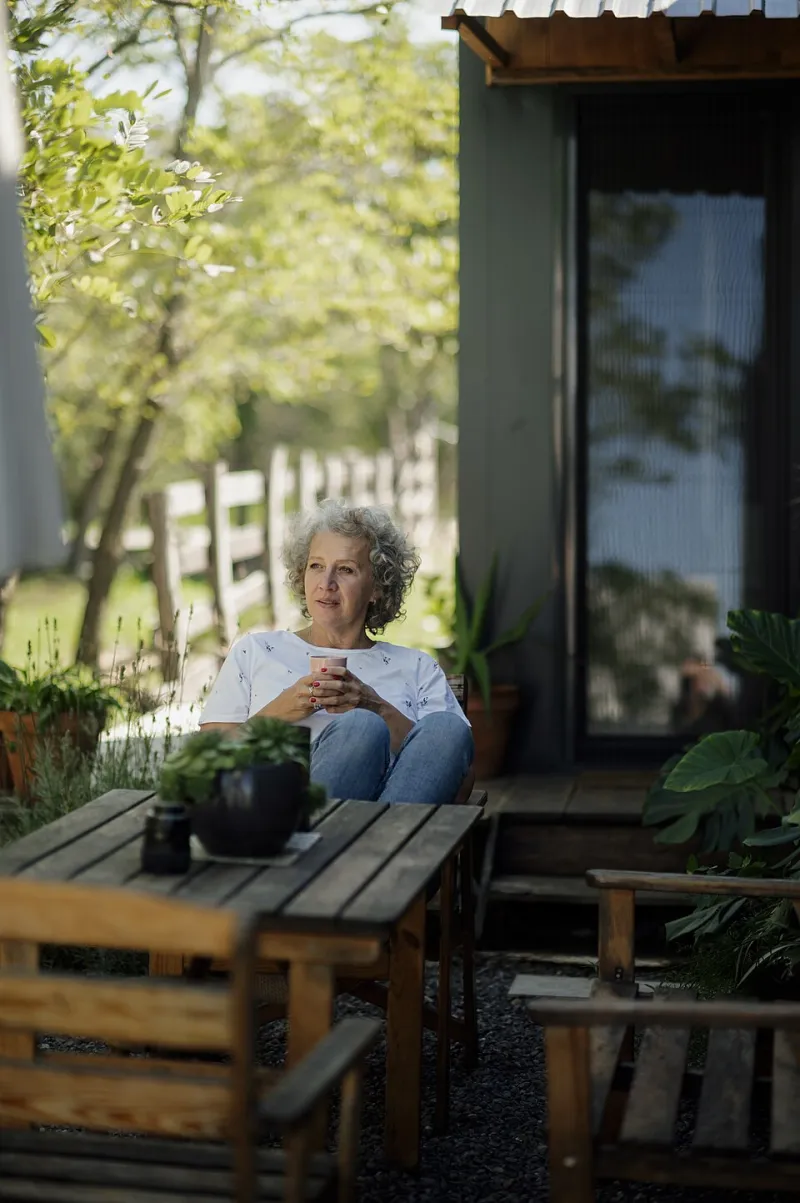
The More You Monitor, The Worse You Feel — Here's the Science Behind Letting Your Body Lead

Photo: Shixart1985, CC BY 2.0, via Wikimedia Commons
When Self-Care Starts to Feel Like Surveillance
You wake up and the first thing you do is check your sleep score. Before breakfast, you've already logged your heart rate variability, your overnight recovery percentage, and whether your deep sleep hit the recommended threshold. By 9 a.m., you've either earned the right to feel okay — or you haven't.
Sound familiar? For a growing number of health-conscious Americans, this is just Tuesday.
We live in a culture that prizes optimization. There's an app for your stress, a wearable for your cortisol, a subscription box for your gut microbiome. And honestly? The intention behind all of it is genuinely good. People want to feel better. They want to take their health seriously. But somewhere between intention and obsession, something quietly breaks down — and your body starts paying the price.
Here's the uncomfortable truth: the more vigilantly you monitor your health, the more you might be undermining it.
Your Brain Can't Tell the Difference Between a Tiger and a Bad Sleep Score
Let's get into the neurobiology for a second, because this is where things get genuinely fascinating.
Your autonomic nervous system operates in two primary modes: sympathetic (fight-or-flight) and parasympathetic (rest-and-digest). Healing, recovery, immune function, hormone regulation — all of that good stuff happens predominantly in parasympathetic mode. Your body literally cannot repair itself efficiently when it's in a state of perceived threat.
Now here's where the paradox kicks in. When you compulsively check health metrics and interpret any deviation as a problem, your brain registers that as a low-grade stressor. The amygdala — your brain's threat-detection center — doesn't distinguish between a predator in the woods and a wearable telling you your recovery score dropped six points. Both can nudge your system toward sympathetic activation.
Research published in journals studying health anxiety has consistently shown that hypervigilance around bodily sensations and health data increases perceived symptoms, amplifies pain sensitivity, and elevates baseline cortisol. In other words, watching for signs that something is wrong can actually make you feel like something is wrong — even when nothing is.
You track sleep to feel rested. But the anxiety of tracking sleep disrupts sleep. You monitor stress to manage it. But the act of monitoring adds to it. The loop feeds itself.
The Identity Trap: When "Healthy Person" Becomes a Full-Time Job
There's another layer here that doesn't get talked about enough. For many people, health optimization stops being a tool and starts being an identity.
When your sense of self-worth becomes entangled with how "well" you performed on your health metrics today, every imperfect number becomes a small crisis. A rest day feels like failure. An indulgent meal becomes a moral event. Missing your step count makes you feel like you're slipping — not just physically, but as a person.
This kind of thinking has a clinical name: orthorexia in its more extreme forms, but even in milder versions, it creates a psychological environment where your body is never quite good enough. And that constant low-level judgment? It's stressful. Chronically, quietly, exhaustingly stressful.
The irony is brutal. You started monitoring your health to feel more in control. But now the monitoring itself is controlling you.
What Letting Go Actually Looks Like (It's Not What You Think)
Before you throw your fitness tracker in a drawer and declare yourself free, let's be clear about something: the answer isn't abandoning all intentional self-care. That's not the move here.
The sweet spot — the place where your body actually gets to thrive — lives somewhere between total neglect and obsessive optimization. It's a place called attuned awareness, and it's a very different animal from hypervigilance.
Attuned awareness means checking in with your body, not interrogating it. It means noticing how you feel after a meal instead of calculating the macros. It means honoring tiredness as information rather than weakness. It means trusting that your body has an intelligence that predates every wellness app ever created.
Here are a few practical ways to start shifting in that direction:
Take a metric vacation. Pick one week and put your tracker in a drawer. Not forever — just long enough to remember what it feels like to move your body without auditing it. Notice whether you feel freer, more anxious, or somewhere in between. That reaction tells you a lot.
Practice the pause before the check. Before you look at any health data, take 30 seconds to tune into how you actually feel in your body. Are you tired? Energized? Tense? Calm? Then look at the data. Over time, this helps you reconnect with your internal signals instead of outsourcing your self-knowledge to a screen.
Reframe data as context, not verdict. A sleep score is one data point, not a judgment of your worth or your day. Treating numbers as curious information rather than pass/fail grades slowly defuses the anxiety around them.
Schedule genuine rest without productivity attached. Not "recovery" rest that feeds into tomorrow's performance metrics. Just rest. Lying on the couch. A slow walk with no step goal. A meal that's just delicious. Your nervous system needs experiences that don't have an optimization agenda.
The Body Already Knows
Here's something worth sitting with: the human body maintained itself for hundreds of thousands of years before anyone had a smartwatch. It knows how to regulate, repair, and restore. It sends signals — hunger, fatigue, pain, pleasure — that are extraordinarily sophisticated if you're willing to listen.
The problem isn't that we've lost the ability to hear those signals. It's that we've gotten so loud with external data that we've drowned them out.
There's a certain kind of healing that only happens when you stop trying so hard to force it. When you give your nervous system the message that everything is okay right now, it can finally do what it was designed to do. Blood pressure eases. Digestion improves. Sleep deepens. Inflammation markers drop. Not because you tracked your way there, but because you got out of your own way long enough for your body to do its job.
That's not woo. That's physiology.
A Different Kind of Health Goal
What if the most radical wellness move you could make this year wasn't adding something to your routine — but removing the pressure from it?
What if "healthy" didn't mean optimized, but at ease? What if the goal shifted from performing health to genuinely inhabiting it?
Your body isn't a project to be fixed. It's a home to be lived in. And sometimes the best thing you can do for it is stop treating every room like a renovation zone and just... be there.
That's where the real healing starts — not on a dashboard, but in the quiet space where you finally trust yourself enough to stop watching so closely.
You don't have to earn your wellness today. You already live there.